Yuval Noah Harari Quotes
30 quotes • 1 books
Books by Yuval Noah Harari
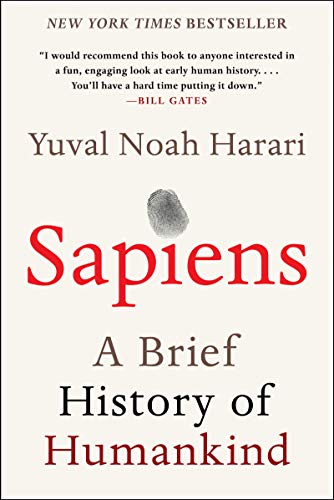
Sapiens: A Brief History of Humankind (30)
““Consistency is the playground of dull minds.” (Meaning)”
“The real root of suffering is this never-ending and pointless pursuit of ephemeral feelings, which causes us to be in a constant state of tension, restlessness and dissatisfaction.”
“Biology enables, Culture forbids.”
“People are liberated from suffering not when they experience this or that fleeting pleasure, but rather when they understand the impermanent nature of all their feelings, and stop craving them.”
“Money is the most universal and most efficient system of mutual trust ever devised.”
“Luxuries tend to become necessities and to spawn new obligations.”
“The essence of the Agricultural Revolution: the ability to keep more people alive under worse conditions.”
“History is something that very few people have been doing while everyone else was ploughing fields and carrying water buckets.”
“If planet earth were to blow up tomorrow morning, the universe would probably keep going about its business as usual. As far as we can tell at this point, human subjectivity would not be missed. Hence any meaning that people inscribe to their lives is just a delusion.”
“We did not domesticate wheat. It domesticated us.”
“Any large-scale human cooperation – whether a modern state, a medieval church, an ancient city or an archaic tribe – is rooted in common myths that exist only in people’s collective imagination.”
“Happiness does not really depend on objective conditions of either wealth, health or even community. Rather, it depends on the correlation between objective conditions and subjective expectations.”
“We study history not to know the future but to widen our horizons, to understand that our present situation is neither natural nor inevitable, and that we consequently have many more possibilities before us than we imagine.”
“Homo sapiens has no natural rights, just as spiders, hyenas and chimpanzees have no natural rights. But don’t tell that to our servants, lest they murder us at night.”
“There are no gods, no nations, no money and no human rights, except in our collective imagination.”
“Each year the US population spends more money on diets than the amount needed to feed all the hungry people in the rest of the world.”
“A meaningful life can be extremely satisfying even in the midst of hardship, whereas a meaningless life is a terrible ordeal no matter how comfortable it is.”
“In order to change an existing imagined order, we must first believe in an alternative imagined order.”
“Obesity is a double victory for consumerism. Instead of eating little, which will lead to economic contraction, people eat too much and then buy diet products - contributing to economic growth twice over.”
“Hierarchies serve an important function. They enable complete strangers to know how to treat one another without wasting the time and energy needed to become personally acquainted.”
“It is an iron rule of history that what looks inevitable in hindsight was far from obvious at the time.”
“Our DNA still thinks we are in the savannah.”
““If happiness is determined by expectations, then two pillars of our society – mass media and the advertising industry – may unwittingly be depleting the globe’s reservoirs of contentment.”
“Sapiens can cooperate in extremely flexible ways with countless numbers of strangers. That’s why Sapiens rule the world, whereas ants eat our leftovers and chimps are locked up in zoos and research laboratories.”
“Many call this process 'the destruction of nature.' But it's not really destruction, it's change. Nature cannot be destroyed.”
“Poverty, sickness, wars, famines old age and death itself were not the inevitable fate of humankind. They were simply the fruits of our ignorance.”
“If you experience sadness without craving that the sadness go away, you continue to feel sadness but you do not suffer from it. There can actually be richness in the sadness”
“We are full of fears and anxieties over our position, which makes us doubly cruel and dangerous.”
“When we break down our prison walls and run towards freedom, we are in fact running into the more spacious exercise yard of a bigger prison.”
“Suffering arises from craving; the only way to be fully liberated from suffering is to be fully liberated from craving; and the only way to be liberated from craving is to train the mind to experience reality as it is.”